Hey, friends 🤗
Welcome back to our Hibiscus Care series. 🌸 The theme is huge, so we've split it into two parts — today we dive deep into the world of ROOTS, the foundation of every stunning hibiscus plant. 😊
About the photos:
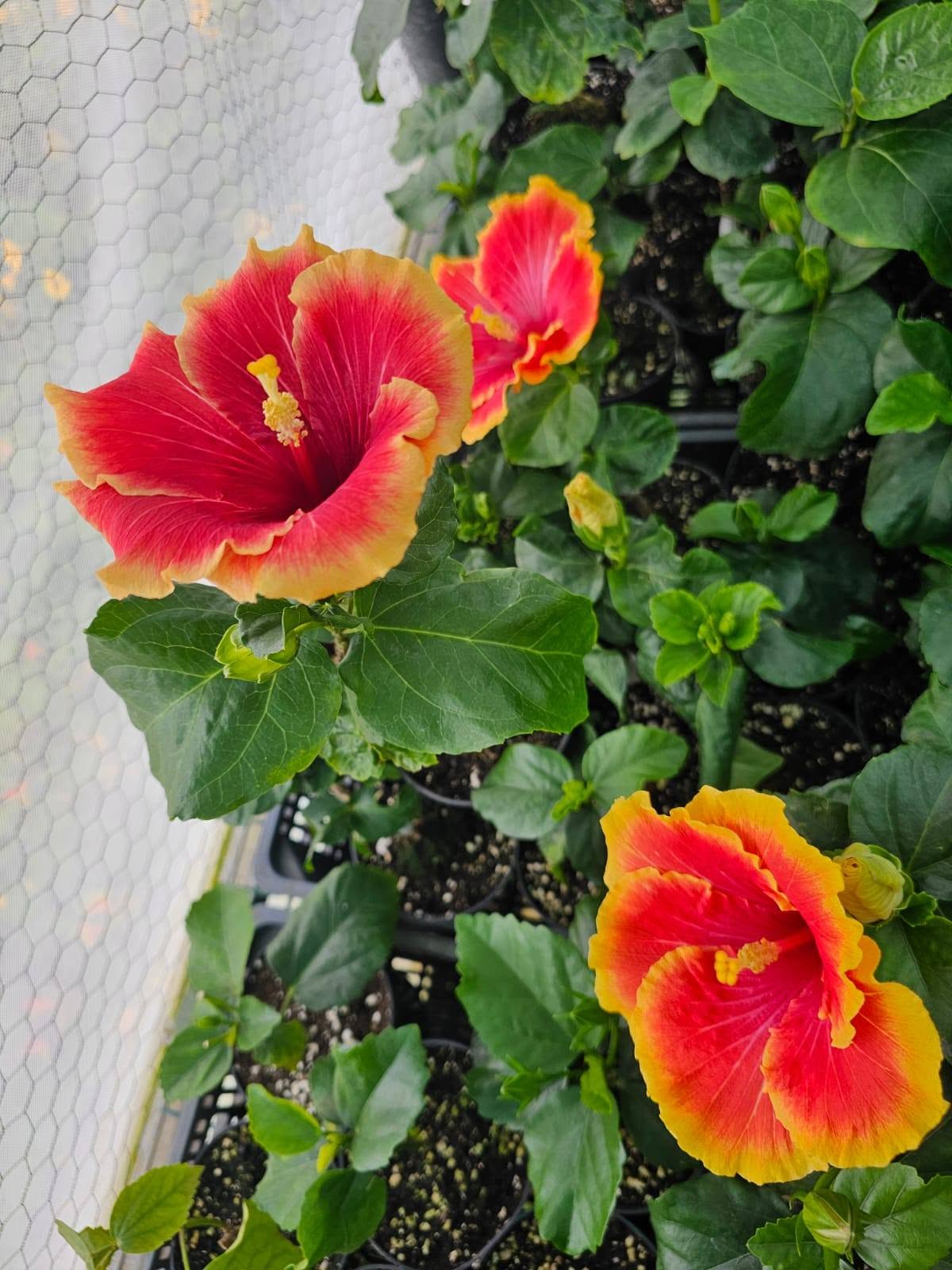
- Young growing plants with healthy roots (leaves should be bright green and firm).
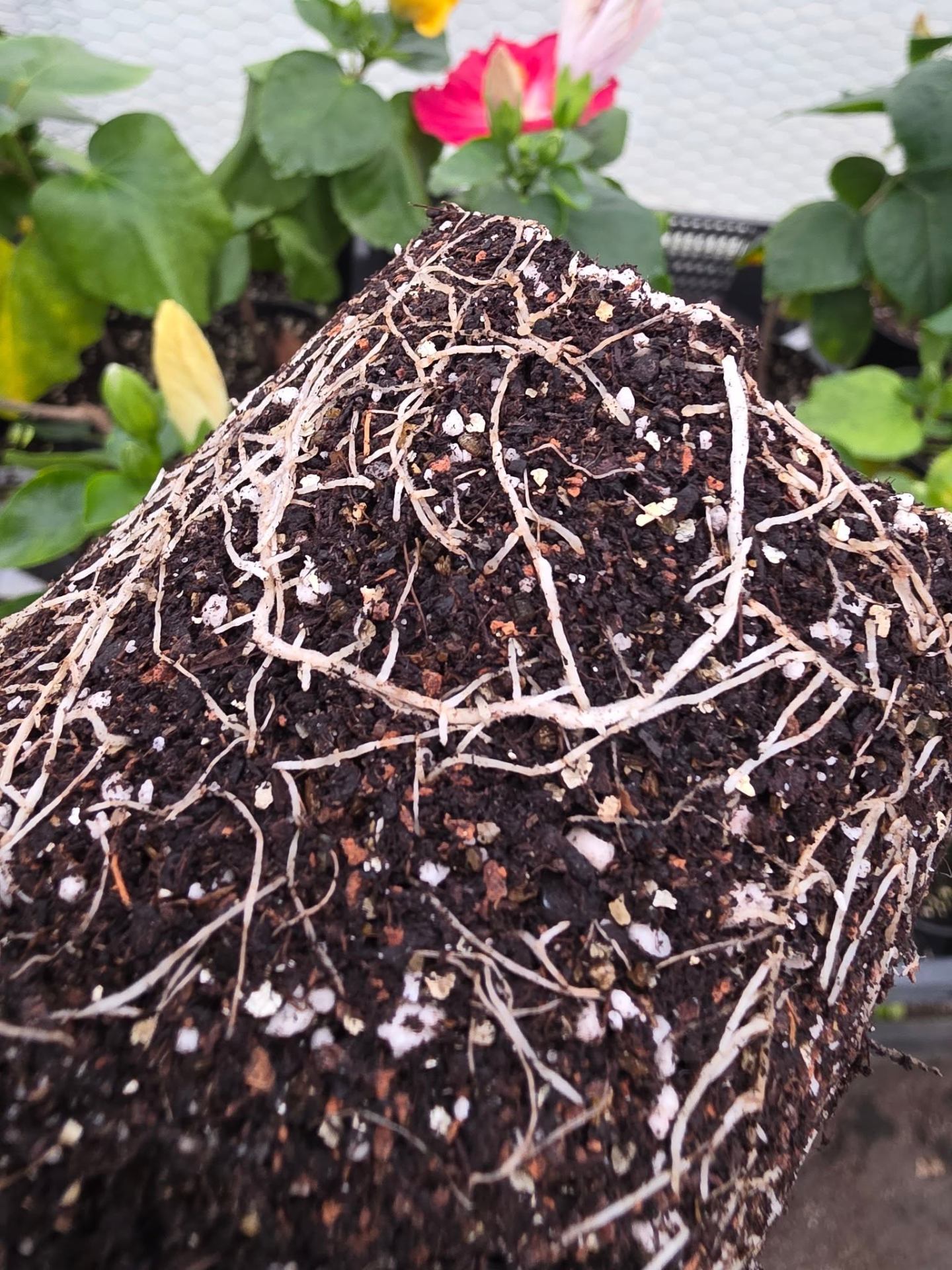
- Healthy young roots, starting to grow. If overwatered, they rot easily.
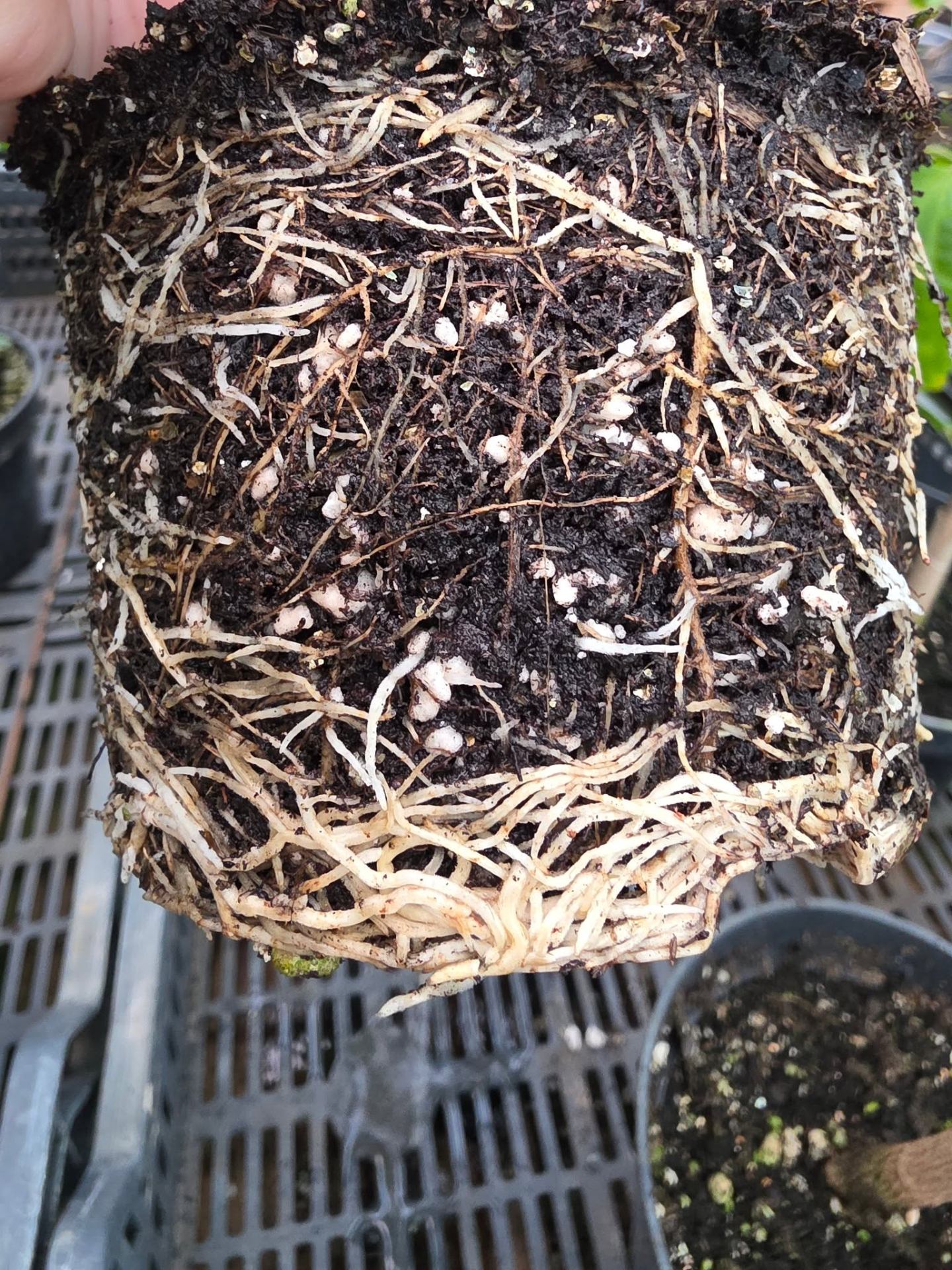
- Stronger roots providing solid growth of the plant (the white spots are perlite).
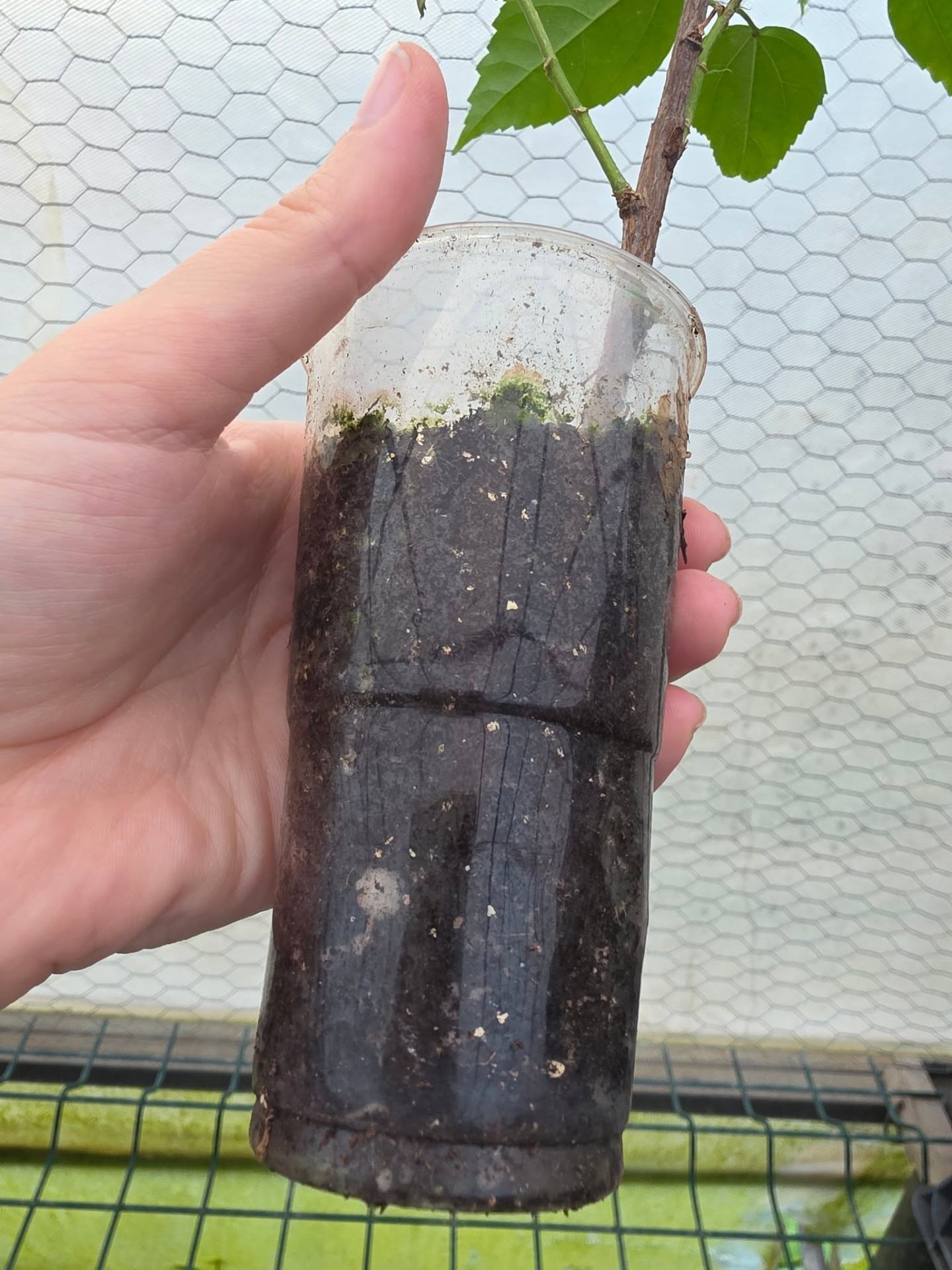
- Overwatered roots that can no longer be seen. The plant is weak but still alive — time to start saving it. A few more weeks of watering and the plant will be dead.
ROOTS ARE THE BASIS OF EVERYTHING. STRONG ROOTS = PERFECT PLANT! 🌿
You can fertilise, water and light your hibiscus all you want — but if the roots aren't healthy, the results will be zero. 🛑 Damaged roots can't absorb nutrients, leaving your plant struggling.
5 MAIN CAUSES OF ROOT PROBLEMS (AND HOW TO AVOID THEM)
A young plant with fine roots is the easiest to overwater. Hibiscus prefer tight pots and a strong root ball. Don't repot until roots cover the entire pot! And if your hibiscus dries out every day — bam, it's time!
- POT TOO LARGE! 😱
Pro tip: repotting too early won't make it grow and bloom faster — it actually delays it. The plant will need several more months to build up its root mass, and only then, with perfect care and no overwatering, will it start to grow.
Tips for repotting:
- When repotting young plants with healthy roots, the new pot should be no more than 2 cm larger in diameter.
- After repotting, reduce watering for the first few months while the plant settles in, to prevent stagnant, damp soil.
- Apply a powdered rooting agent to the roots when repotting, and carefully water the soil 2× a month with any root juice containing amino acids.
Roots stop breathing → fine hairs die → plant suffers.
- OVERWATERING THE ROOTS 💦
When hibiscus roots are regularly overwatered (the soil never dries out, or stays constantly flooded), the roots stop breathing — often combined with insufficient light.
The fine root hairs that supply moisture and nutrients gradually die off and rot, so the plant needs less and less water.
With the same amount of moisture and no change of conditions, not only the fine hairs but the main roots also start to die.
As a result, the above-ground parts start to die, leaves weaken or drop, roots rot further, and the plant stops growing — looking like it's just surviving. Flowering is out of the question. Sound familiar?
Tips to avoid overwatering:
- Never use or leave water that has drained out, even for a few hours.
- Water the hibiscus only when the pot feels light, and make sure the soil is moist — not wet and heavy — after watering.
- Always check how heavy the pot is if the plant looks sick or dry, BEFORE watering it.
Water stagnation = roots rot fast. If water pools in the pot, it's a recipe for disaster. Fungus is right there — be careful!
- USING AN UNDERPOT — CAUSING MASSIVE ROOT PROBLEMS 🚨
Fix it:
- Never use an underpot.
- Make sure the pot has drainage holes.
- Empty excess water from any saucer.
- Never leave drained water in the pot!
This one is straightforward: a few hot days with bright sun, or forgetting your plant near a radiator for a few days, and the small roots dry out within hours.
- LETTING THE ROOTS DRY OUT! 😱
Tips to save your plant:
- Don't let the root ball dry out too much. Better to water more frequently in small amounts than to let it dry out and then drown it.
- If you've overwatered after drying out, water with a root stimulant to moisten the entire root mass. Monitor for a few days and don't overwater further. A healthy plant should bounce back without extra help! 🌱💧
Happens with waterlogged soil + low light + high humidity + poor air flow.
- FUNGAL DISEASE 🍄
It can appear in poorly aerated, waterlogged soil, excessive humidity, cool room temperatures, and insufficient light. Main symptoms:
- Root rot
- Death of the plant's tops
- Spots on the leaves
Fix it:
- Dry out the soil (but avoid drying out the roots).
- Water and spray your plant with a fungicide (follow the instructions).
- Increase lighting up to 12 hours a day.
- Reduce watering until the plant fully recovers (keep the soil just a bit moist / almost dry).
Oh, this was a lot to write ✍️😅😳
PART 2 COMING TOMORROW 🌟
What to do when hibiscus roots are already rotting and the plant is dying 🤯